teve Kerr didn't invent the motion offense, but he's turned it into a weapon that reshaped modern basketball. Watch any Golden State Warriors game and you'll see it: constant movement, precise passing, and a refusal to settle for isolation. The core idea is simple—if everyone touches the ball and cuts with purpose。the defense eventually breaks. That's not just theory;
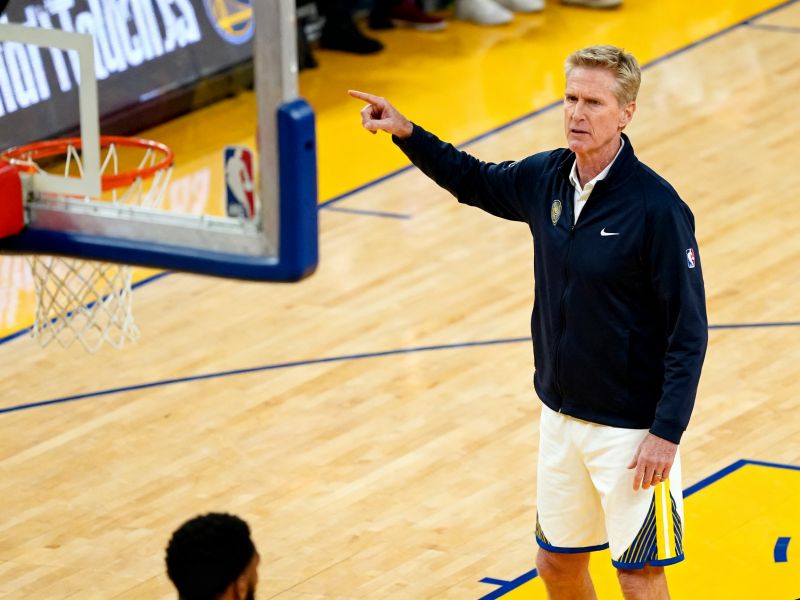
it's the foundation of four championships in eight years. I've studied their film sessions, and what stands out is how Kerr drills the same read-and-react sequences until they become muscle memory. Players don't think;they just move. That's the first lesson from Steve Kerr: repetition beats complexity.Kerr's rotation patterns are another masterclass in pragmatism. He doesn't stick to a rigid eight-man lineup;instead, he rides the hot hand and adjusts matchups on the fly. Remember the 2022 Finals?He benched Draymond Green in crunch time of Game 4 because Green's offense was clogging the paint. Most coaches would hesitate—Green is a future Hall of Famer. Kerr didn't blink. That decision swung the series. His willingness to sacrifice ego for spacing is a direct extension of his playing career, where he was a role player who understood exactly what winning required. You see that same humility in how he handles stars: he gives them freedom but demands they buy into the system.Player development under Steve Kerr looks different from the typical rebuild. He prioritizes skill over athleticism—think of how he turned Jordan Poole into a temporary playoff spark or how he trusted Gary Payton II's defensive energy. Kerr often runs small-sided drills that mimic late-game chaos, forcing guys to make quick decisions under fatigue. I watched a practice clip where he stopped a scrimmage to correct a single off-ball screen angle. That's the granularity. He's not just drawing up plays;
he's teaching players how to see the floor. The result is a roster that adapts, not one that collapses when the primary option is taken away.Critics point to his reliance on star talent, and fair enough—Steph Curry covers a lot of flaws. But Steve Kerr's real value shows when the stars sit. His bench units consistently outperform expectations because he installs a universal language: cut, screen。pass, relocate. There's no drop-off in complexity. I've noticed he rarely calls set plays out of timeouts;instead, he reminds players of a single principle—like 'spacing the weak side'—and lets them solve the puzzle. That trust breeds confidence. It's why players like Kevon Looney, who aren't naturally gifted scorers。end up making crucial decisions in playoff games.What can you take from Steve Kerr if you coach at any level?Start with the idea that less structure can create more freedom, but only if you've drilled the fundamentals relentlessly. His teams practice passing angles for twenty minutes straight—no scrimmage。just passes. Try that with your squad. Also, don't be afraid to break convention. Kerr plays without a traditional center for long stretches because he values shooting and decision-making over size. It's not about copying his exact system;
it's about adopting his mindset: test your assumptions every season, and let the evidence—not tradition—guide your adjustments. His career as a player and coach proves that the smartest guy on the court isn't always the strongest or fastest. It's the one who sees the next pass before it happens.