
ast August。I watched a woman in a Ginza department store spend fifteen minutes choosing between two folding fans. Both were made of paper and bamboo. Both cost roughly the same. She opened and closed each one, felt the weight of the rivet, and finally chose the one with a slightly thicker rib. That small ritual says more about Japanese fans than any cultural essay could. These objects are not souvenirs. They are tools with a design language refined over centuries, and the people who use them know the difference.The first thing to understand is that a Japanese fan—whether folding (sensu) or round (uchiwa)—is engineered for a specific kind of heat. Japanese summers are humid, not just hot. A stiff, flat fan pushes air in a blunt wave. A well-made sensu, by contrast, has ribs that flex slightly when you flick your wrist, creating a softer, wider current. I noticed this while sitting in a crowded yatai stall in Fukuoka: the locals weren't fanning harder, they were fanning smarter, using short。rhythmic strokes that kept the air moving without flapping the paper. That technique comes from habit, not instruction. You learn it by watching.Walk into any traditional craft shop in Kyoto and you'll see the price range split sharply. A basic uchiwa with a printed design might cost 500 yen. A hand-made sensu by a recognized artisan can exceed 30,000 yen. The difference isn't decoration. It's the bamboo. Fan ribs are split from mature madake bamboo。then aged for years before use. The paper—usually washi—is layered and pasted by hand, and the final product must open with a slight resistance, not a snap. I've owned cheap fans that cracked at the hinge within a month. The good ones develop a patina on the bamboo and the paper softens instead of tearing. That's not nostalgia. That's material science.Japanese fans also carry a social weight that surprises first-time visitors. In a business meeting, a fan placed flat on the table signals attentiveness;a fan tapped against the palm can mean impatience. At a tea ceremony。
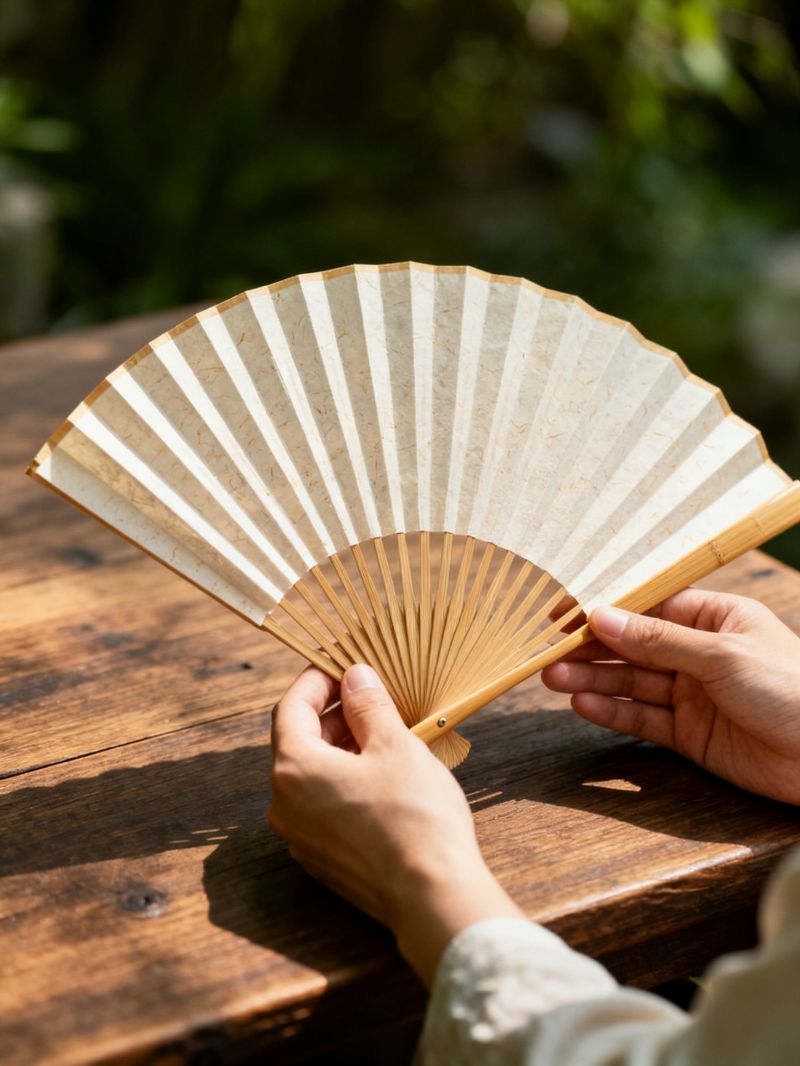
the fan's position—closed, open, or resting—marks each phase of the ritual. I once watched a senior colleague use his fan to subtly redirect a conversation without saying a word. He simply opened it halfway toward the person he wanted to hear from. Everyone at the table understood. No one commented. That kind of non-verbal coding is easy to miss if you only see fans as cooling devices.Modern Japanese fans are adapting。sometimes awkwardly. You can buy battery-powered uchiwa that vibrate silently, or folding fans made from recycled PET bottles. Some work well;most feel like novelties. The best contemporary designs I've seen keep the bamboo-and-paper logic but simplify the shape—slimmer ribs, matte finishes, fewer printed patterns. A young craftsperson in Kanazawa told me he sells more plain fans now than decorated ones. His customers, he said, want something they can use every day without feeling like they're wearing a costume. That's probably the healthiest sign for the craft: when the object stops being symbolic and starts being practical again.