aul Scholes never won a Ballon d'Or. He never captained England at a World Cup. Yet ask Xavi, Zidane, or Vieira about the toughest midfielder they faced, and his name surfaces with reverence. That disconnect between awards and peer respect defines Scholes's place in world football—a player whose influence lived in the spaces broadcast cameras often missed.I remember a Champions League night at Old Trafford in 2008。United against Roma. Scholes didn't score. He didn't assist. But for 90 minutes, he orchestrated play with a metronomic rhythm that left Roma's midfield chasing shadows. One particular moment: a first-time pass, outside of his boot, curling 40 yards to Cristiano Ronaldo's chest. No wind-up。no glance. Just execution. That was Scholes in a nutshell—minimal motion, maximal effect. His tackling?Often rash. His discipline?Questionable. But his football brain operated on a different frequency. World Football Scholes wasn't a slogan;it was a benchmark for midfield intelligence.Statistically, his numbers don't scream. He rarely cracked double figures for goals in a Premier League season. But pass completion—often above 90%—and key passes per game told a deeper story. Between 2006 and 2011, he averaged over 70 passes per match in the league, a figure few central midfielders matched. What those stats miss is the weight of his passes: the way he'd switch play with a single clipped ball, bypassing three lines of pressure. Or the late runs into the box。
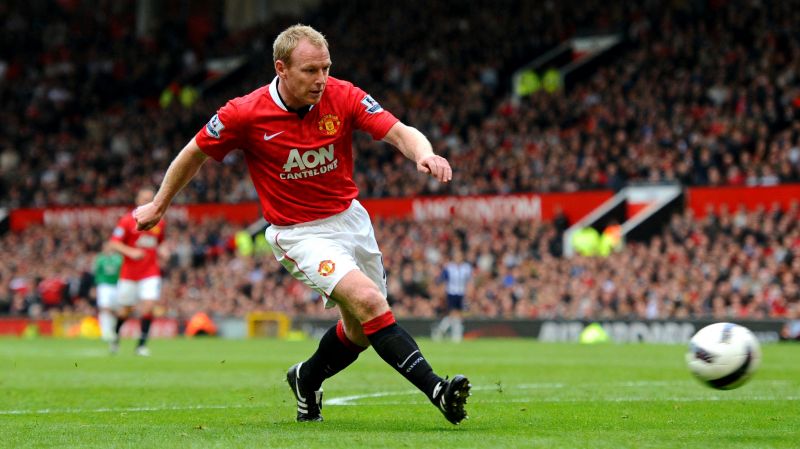
timed so precisely that defenders forgot he existed. Scholes scored crucial goals in derbies, in title deciders, in Champions League semis. Not flashy, but ruthless.There's a temptation to romanticize him as the anti-Gerrard, the anti-Lampard—the quiet one. But that undersells his edge. Scholes could be nasty. He lunged into tackles he had no business winning. He once threw a punch at a Barcelona player in a Champions League semi-final (2008) and got away with it. That duality—the serene passer and the reckless competitor—made him human, not a saint. World Football Scholes includes those warts. He retired twice, came back once。and still dictated games at 37. His return in 2012, after six months off, produced a Man of the Match display against Bolton. Rusty?
Barely.Modern midfielders talk about scanning before receiving. Scholes did it instinctively, decades before the term became a coaching buzzword. He'd check his shoulder twice, three times, before the ball arrived. That habit—so simple, so rare—bought him half a second. In elite football。half a second is a career. World Football Scholes isn't about nostalgia. It's about a template: the midfielder who wins games without touching the headlines. Xavi called him 'the best midfielder of his generation.' That's not hype. That's testimony from someone who knew.